Welcome to Syracuse Bird Control: Prevention and Removal of Unwanted Birds
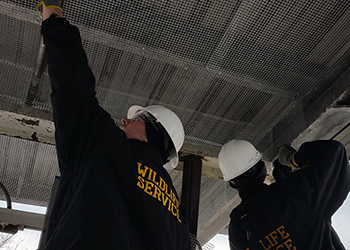
Our company specializes in resolving problems caused by birds in Syracuse, New York, both residential and commerical. We handle bird species such as pigeons, starlings, grackles, sparros, and even Canada Geese and woodpeckers. We generally don't kill birds - we prevent them from causing problems. Most commonly, this means that we install barriers that prevent them access to your building or property, or anti-roosting devices that prevent them from landing, nesting, or roosting on your home, store, building, or anywhere. We use netting, needle strips, shock track, and more. We do offer trapping in some cases, and removal of birds from warehouses, grocery stores, or other commerical or industrial buildings by netting or sometimes pellet shooting. We have a wide variety of tools and methods for solving every manner of bird problem. Call us at 315-927-6147 to discuss your bird problem today.Our Work
Full Range of Bird Control Services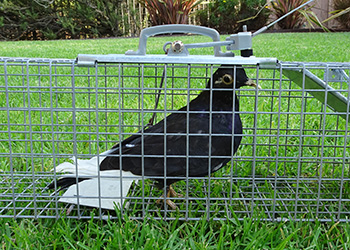
More About Us Syracuse Bird Control:
Some types of birds are considered urban pests, like pigeons, sparrows, starlings, grackles, seagulls, etc. We are a company that has been helping people resolve their bird problems for more than a decade. We are experts in using a range of solutions that include installing prevention devices such as shock track and needle strips, removing their access from common roosting sites, and introducing bird nets made from sturdy materials that can resist different elements such as harsh weather conditions. Our commitment to service excellence has allowed us to gain the trust and loyalty of our customers. We have been voted as the leading bird control company in the state for over three years now. We have also been recognized by the different organizations for our excellent, honest service. With the success that we are enjoying, we will never forget to give back to the community we serve. We are a major sponsor of different local events and activities. We also share a portion of our money with charity organizations. Our services are designed to improve your life quality by keeping you safe from bird-related hazards such as property damages and zoonotic diseases. Call us today, and let us discuss how we can be of service to you.Methods To Reduce Bird Populations
Birds can be such frustrating and pesky pests that homeowners and ground care manager have to deal with. Although cute and loved by nature lovers, they can easily turn into a public relations nightmare for business owners.
To deal with the bird problem, several techniques can be used effectively. For you to devise an effective bird control program, you need to understand the various threats that the bird posed and the control options to consider.
Spreading diseases
Besides making tainting your beautiful home facades, birds are also known to contribute to a spread of diseases including histoplasmosis. This is a dreaded and common disease associated with spots where nest bird. The Center for Disease Control and Prevention warns of histoplasmosis and the hazards associated with it. This fungus is known to exist in their droppings as well as in the soil. The diseases can be contracted by simply touching the bird dropping and infected soil. In addition, the diseases can be airborne. Most of the symptoms associated with this disease are common to those of respiratory ailments and influenzas such as chest pains and dry cough.
Not only is the disease extremely painful, it can be fatal if not treated. Fortunately, diagnosis is possible with anti-fungal treatment providing the much needed and full recovery. Although the disease is not epidemic, it explains why it is important for you to establish bird population measures where humans it is safe for humans to live and work.
Birds are also known to indirectly spread other diseases. One notable example is the transmission of the West Nile Virus once mosquitoes sting a bird. Although birds are not responsible for the spread of the West Nile Virus, they act as reservoirs that allow mosquitoes to spread the fatal disease.
Although a huge population of birds does not necessarily mean that you are in areas full of diseases, this large and well-established population multiplies the risks of contracting bird-related diseases. The more the population grows, the higher the threat of spreading these diseases. According to reports by the CDC, there has been an increase in cases of West Nile Virus over the past few years. Since the diseases were discovered a few years ago, the West Nile Virus continues to spread to other parts of the country.
Controlling bird population
To effectively keep the bird population in control, reducing the attractiveness of a facility and spaces to roosting birds is highly recommended. To begin with, the occupant of such areas is discouraged against feeding birds. Unfortunately, it may be difficult to convince staff members that adopting birds are not a good idea. Feeding birds help, the birds establish the areas as a suitable source of food. Within no time, you will see them grow in number. If left unchecked, they will soon grow into serious pest population within a short time.
Secondly, managers can use various exclusion measures. For instance, doors should remain closed while the windows are fitted with screens. Warehouses, as well as larger commercial building including retail stores and airports, usually have huge bird populations, which is as a result of doors being left open.
If staff members at these facilities are dealing with foods, they are likely to get visits by the local food inspectors since the food might be contaminated. However, if the bird population is discouraged especially outside, they will also minimize the likelihood of birds entering the building.
Thirds, business owners should encourage their staff to report cases of unwanted birds before the populations go out of hand. This way, they will have control at an early stage. Keep in mind that it is extremely costly to control the population when it is small that waiting for it to grow excessively.
Bird population control considerations
Bird population control is best left to the trained and experienced individuals. Keep in mind that birds usually live in places that are hard to reach. With health risks they pose to the workers, safety measures must be taken such as the use of special respirators.
Most business owners have in place the necessary technique effective in discouraging birds from roosting and living in the facilities. Some of these techniques are physical and might demand the used of specialized equipment.
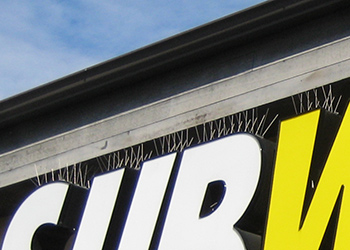
Wires and spikes, which are designed for bird control, can also be used to discourage the birds from roosting in the facility. These products are placed in strategic locations on the balconies, ledges, and on the roof to discourage the birds from roosting or resting on the structures. These bird deterrent devices vary significantly although they all have almost the same concept. Some of them are electrified with a low voltage that scares the birds away and does not harm the bird.
Others are designed to repel birds by making then uncomfortable in the roosting spots. Physical barriers can also be used to discourage the birds from building their nests. Scare devices are also commonly used with an outstanding effectiveness. Some of these devices are balloons, horns, whistles, and fake predator birds. With exterior and interior bird control measures, this can help discourage the bird population from expanding. It is always recommended that you seek professional services to help you with the bird problem. Alternatively, invest in bird deterrent measure while the population is still young. This will make it easy for you to deal with the problem while saving you a great deal of money.
Also read our other bird tip: What if a pigeon got inside my house, bedroom, kitchen, etc.
We have the most experience in Syracuse at understanding the nuisance birds of New York. Our 7 years of experience in the field ensures excellent results.
We pride ourselves on the quality of our bird control work. Our work is professional grade and long lasting, usually for the life of the building.
We are fully New York licensed. We carry the correct safety equipment, and operate in a safe and professional manner to keep your building and people safe.
Call us at 315-927-6147 to discuss your bird problem and our process. We are always responsive by phone. We can usually schedule next-day appointments, and provide written estimates for all our bird work.
Thank you Syracuse Bird Control for keeping the pigeons off of my storefront. My sidewalks are clean now!
These guys were the only ones who could get a sparrow out of my clothing store. Thank you!
Your goose abatement program has kept my golf course dropping-free. I recommend Syracuse Bird Control.